
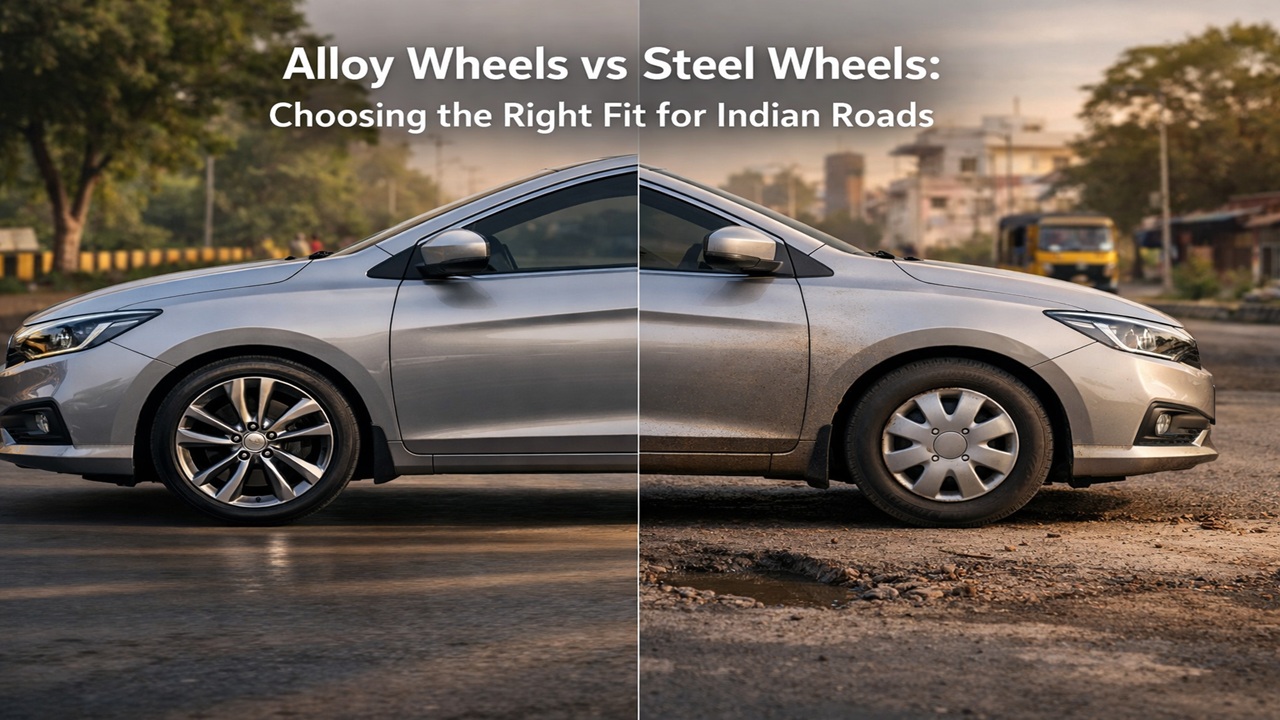
Choosing the right wheels is one of the most common decisions Indian car owners face. It is not just about style. On Indian roads with potholes, uneven surfaces, heat, dust, and waterlogging, wheels directly affect safety, comfort, handling, and long term ownership costs.
Most buyers consider alloy wheels or steel wheels soon after buying a car or while planning an upgrade. Alloy wheels offer better performance and visual appeal, while steel wheels focus on durability and value. This guide compares both options based on real Indian driving conditions, covering advantages, disadvantages, costs, legality, and everyday usability to help you make the right choice.
Why Wheel Choice Matters More in India Than You Think
The wheels you choose affect how your car feels every day. They influence fuel mileage, braking, steering control, and how comfortably your car handles bumps and rough patches. These details may seem small when buying a car, but they make a big difference over years of driving.
In India, daily driving includes speed breakers, heavy traffic, sudden braking, overloaded roads, and changing weather. This puts constant pressure on your wheels. The right wheels make driving smoother, safer, and less stressful. The wrong choice can lead to higher repair costs and reduced control, especially when road conditions are challenging. Understanding the true cost of car ownership in India helps put wheel decisions in perspective.
What Exactly Are Alloy Wheels?
Alloy wheels are mainly made from aluminium mixed with small amounts of other metals like magnesium or nickel. This combination makes the wheel lighter, stronger, and better at releasing heat than regular steel wheels.
Most factory fitted alloy wheels in India are made using cast aluminium. Some premium cars use forged alloy wheels, which are even lighter and stronger but also much more expensive. Alloy wheels are also popular because they allow more stylish and detailed designs that are not possible with standard steel wheels.
Steel Wheels: The Underrated Workhorse
Steel wheels are made by shaping and welding steel sheets together. They are heavier than alloy wheels and have a simple design. To improve their appearance, they are usually painted or covered with plastic wheel caps. Most entry level cars in India come with steel wheels as standard.
The biggest advantage of steel wheels is their toughness. When they hit a pothole or rough patch, they usually bend instead of cracking. This makes them easier and cheaper to repair at local garages, which is a big benefit on unpredictable Indian roads.
Advantages of Alloy Wheels: Beyond Just Looks
Alloy wheels deliver tangible benefits when conditions allow:
Reduced suspension load: Alloy wheels are lighter than steel wheels, usually by about 15 to 25 percent. This lower weight reduces the load that is not supported by the suspension. Because of this, the shocks and springs can respond faster to bumps and rough patches. The result is better tyre contact with the road and a smoother, more controlled drive, especially on uneven surfaces.
Improved fuel efficiency: Lighter wheels mean your engine works slightly less during acceleration. Over 50,000 kilometres, this can save 3 to 5 percent in fuel consumption depending on driving style and vehicle weight.
Superior brake cooling: Aluminium conducts heat far better than steel. During long drives or heavy city traffic braking, alloy wheels help release heat from brake discs faster, reducing the risk of brake fade, which is a genuine safety advantage.
Enhanced handling precision: Because alloy wheels are lighter and easier to rotate, they help the car respond quicker to steering inputs and stay more stable while cornering. Many drivers notice a more controlled and confident feel, especially during highway overtakes or on winding hill roads.
Aesthetic flexibility: Alloys come in diverse finishes chrome, matte black, machined face allowing personalisation that steel wheels cannot match. For many owners, this visual upgrade transforms the car’s presence.
Disadvantages of Alloy Wheels on Indian Roads
The same properties that make alloys perform well also create vulnerabilities:
Impact vulnerability: Alloys crack under sharp impacts where steel would merely bend. A deep pothole at 60 km/h can shatter an alloy rim, requiring full replacement. Steel wheels often survive the same hit with a repairable bend.
Higher replacement cost: A standard 15 inch steel wheel costs ₹1,500 to ₹2,500 in India. An equivalent alloy wheel starts at ₹4,000 and can exceed ₹15,000 for premium designs. Insurance may not cover surface damage, making out of pocket expenses significant.
Repair limitations: While minor scratches or bends on alloy wheels can sometimes be repaired, structural cracks usually require full replacement. In comparison, steel wheels can often be straightened at local workshops for under ₹500, making repairs quicker and more affordable.
Corrosion in coastal areas: Though resistant to rust, alloys can suffer from pitting corrosion when exposed to sea air and road salts. Regular cleaning becomes essential for owners in Mumbai, Chennai, or Goa. For wheel-specific care, explore our best car cleaning accessories for Indian weather conditions.
Monsoon anxiety: During heavy rains, hidden potholes become serious hazards. Many Indian drivers report consciously slowing down on familiar routes simply to protect their alloy investment. Check our top 10 car maintenance tips to survive the monsoon season for practical protection strategies.
Are Alloy Wheels Legal in India? The RTO Reality
Yes, alloy wheels are completely legal in India when installed correctly. However, critical rules apply under the Motor Vehicles Act:
- Wheel diameter must stay within 1 inch of the manufacturer’s original specification
- Overall wheel and tyre diameter should not exceed 3 percent of the original manufacturer size.
- Wheels must carry BIS (Bureau of Indian Standards) certification mark
- The tyre must fully cover the wheel rim width, with no exposed edges allowed
Installing oversized alloys without RTO approval can lead to fines under Section 190(2) of the MV Act and may void insurance claims after accidents. Always retain purchase bills and BIS certificates when upgrading.
Alloy Wheels vs Steel Wheels: The India Specific Verdict
There is no universal winner. The right choice depends entirely on your driving reality:
Choose alloy wheels if:
- You drive mostly on maintained city roads or highways
- Your daily route has minimal potholes or construction zones
- You value visual appeal and are willing to drive carefully.
- Your car is a mid to premium segment model where alloys are OEM fitted
- You plan to keep the car for under 5 years before upgrading
Choose steel wheels if:
- You regularly face broken roads, rural stretches, or monsoon damaged surfaces
- Budget constraints make replacement costs a genuine concern
- You own a commercial vehicle or high mileage fleet car
- You prefer stress free ownership without constantly watching the road for damage.
- You live in coastal areas with high corrosion risk
Many experienced Indian drivers adopt a hybrid approach: alloys for daily city use during dry months, and steel wheels with all weather tyres during monsoons. This strategy balances performance with practicality.
Do Alloy Wheels Actually Improve Handling? The Truth
Yes, but within limits. Alloy wheels improve handling mainly because they are lighter, not simply because of the material. This lower weight helps the suspension keep tyres better connected to the road, especially during quick steering inputs or over small bumps.
However, on badly damaged roads, durability matters more than sharp handling. In such conditions, steel wheels often feel more dependable. Tests by Indian automotive publications confirm that alloy wheels improve steering response and grip on smooth roads, but in everyday Indian driving, road quality usually has a bigger impact than wheel type.
Cost Comparison: What Indian Owners Actually Pay
| Wheel Type | 14 Inch Price | 15 Inch Price | 16 Inch Price | Typical Repair Cost |
|---|---|---|---|---|
| Steel | ₹1,200 – 2,000 | ₹1,800 – 2,800 | ₹2,500 – 3,500 | ₹300 – 600 (bend repair) |
| Alloy | ₹3,500 – 6,000 | ₹4,500 – 9,000 | ₹7,000 – 15,000+ | ₹8,000 – 15,000 (replacement) |
Prices reflect average Indian market rates as of 2026. Premium branded alloys cost significantly more.
Note that insurance coverage varies. Many policies cover alloy damage only under own damage claims with applicable depreciation. Always confirm coverage before upgrading.
Making the Smart Choice: An Indian Owner’s Checklist
Before deciding, ask yourself these questions:
- What percentage of my weekly driving happens on roads with visible potholes or damage?
- Can I afford to replace one or two wheels unexpectedly without financial stress?
- Do I drive aggressively or prefer cautious, defensive driving especially during rains?
- Is visual appeal a priority for my ownership satisfaction?
- Will I keep this car beyond 7 years when corrosion and wear become factors?
Honest answers will guide you better than showroom advice. For broader upgrades, see our top 10 low maintenance cars in India to pair wheels with reliable models.
The Role of Quality Car Accessories Manufacturers
Not all alloy wheels are created equal. Reputable car accessories manufacturers in India adhere to strict casting standards, proper heat treatment, and BIS certification. Cheap, uncertified imports may look similar but lack structural integrity, posing serious safety risks.
Always check for BIS certification and buy wheels only from authorised dealers. Your wheel choice affects braking and stability at high speeds, so do not compromise on quality just to save a few thousand rupees.
Looking Ahead: The Evolving Indian Wheel Market
Indian roads are gradually improving with Bharatmala and state highway projects. As surface quality rises, alloy wheel adoption will naturally increase. Meanwhile, wheel manufacturers are developing hybrid alloys with improved impact resistance specifically for emerging markets.
For now, awareness remains your best tool. Understanding your road reality and matching it to wheel characteristics ensures years of confident, cost effective ownership.
FAQs About Alloy Wheels vs Steel Wheels
Are alloy wheels safe for Indian roads? Yes, alloy wheels are safe when used in the correct size and driven sensibly. The main risk comes from hard impacts with deep potholes, not from any safety issue with the wheels themselves. Driving carefully during monsoons and at night, when potholes are harder to see, helps reduce the risk.
Can I replace my car’s steel wheels with alloys later? Yes, you can upgrade to alloys later. Ensure the new wheels match your car’s PCD (pitch circle diameter), offset, and load rating. Always consult a professional installer and retain BIS certification documents for RTO compliance.
Do alloy wheels reduce mileage? No. Alloy wheels usually improve mileage slightly because they are lighter. In real world conditions, the improvement is modest, typically around 1–2 percent. However, fitting larger diameter alloy wheels with low profile tyres can cancel this benefit and may even reduce fuel efficiency.
Which cars in India come with alloy wheels as standard? Most mid segment and premium cars offer alloys even in base variants. Examples include Hyundai Creta, Kia Seltos, Maruti Suzuki Grand Vitara, Tata Nexon, and all sedans above ₹10 lakh. Entry level hatchbacks and budget sedans usually feature steel wheels with covers.
How do I maintain alloy wheels in India? Clean wheels weekly with pH neutral cleaners. Avoid acidic wheel cleaners that can damage the finish. Remove brake dust regularly. During monsoons, wash the wheels thoroughly after driving through waterlogged sections to prevent chemical corrosion. Apply protective wheel wax every few months for added protection.
Can damaged alloy wheels be repaired? Minor scratches or curb marks on alloy wheels can often be repaired and refinished. However, cracks, serious bends, or damage near the centre mounting area usually mean the wheel must be replaced. Unlike steel wheels, alloy wheels should not be hammered back into shape because the material can weaken and become unsafe.
Conclusion:
Alloy wheels and steel wheels each serve distinct purposes in the Indian context. Alloys deliver performance and style where roads cooperate. Steel wheels provide resilience and value where roads challenge.
The wisest Indian car owners do not chase trends. They match their wheel choice to their actual driving environment, budget reality, and ownership timeline. That alignment not creates satisfaction it saves money, reduces stress, and keeps you moving confidently through India’s wonderfully unpredictable roads.
Ready to upgrade your ride with the right wheels? Explore quality options designed for Indian conditions and drive with confidence every day.
For more tips on improving your vehicle’s performance and appearance, check our guide on choosing the right car accessories for Indian monsoons and give your car a stylish, well-protected look no matter the weather.