
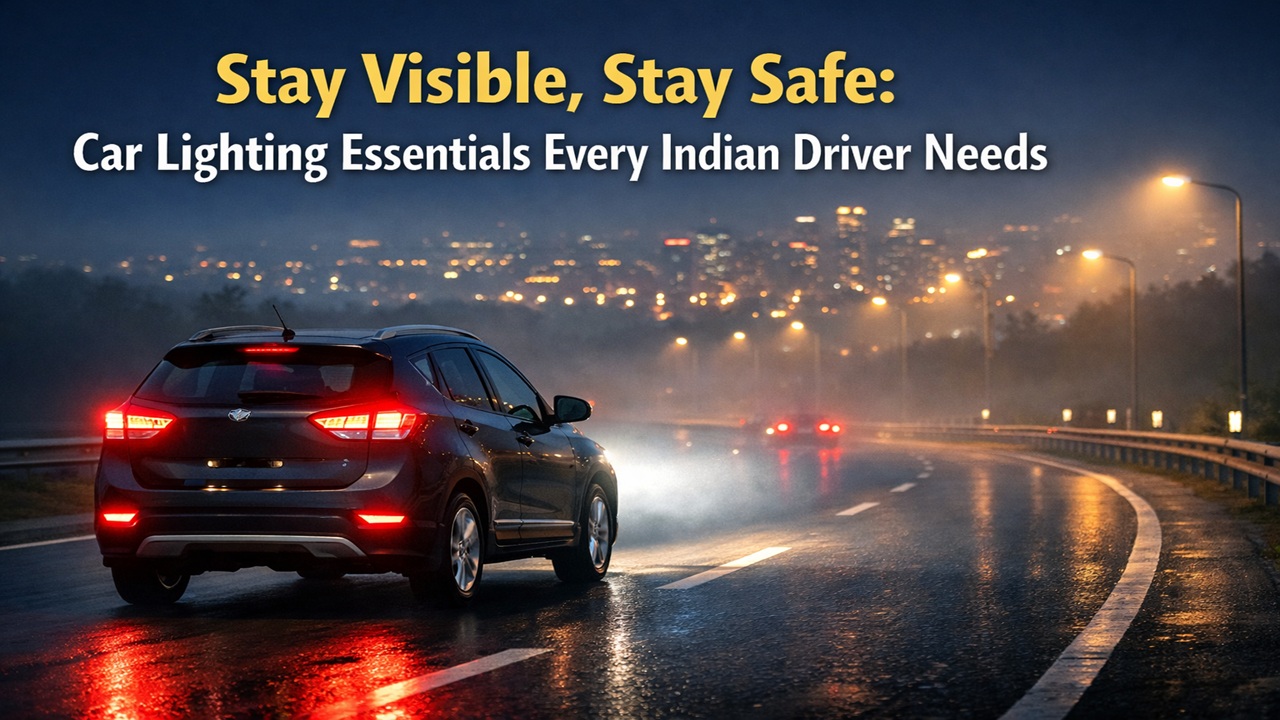
Night driving in India is challenging even for experienced drivers. Poorly lit highways, unmarked speed breakers, pedestrians crossing without warning, animals on the road, and widespread misuse of high beams all add to the risk. In this environment, car lighting is not just a comfort feature. It is a critical safety system.
Many Indian car owners underestimate how much poor lighting affects reaction time, judgement, and overall road safety. Weak headlights, misaligned beams, faded bulbs, or outdated lighting technology can quietly increase accident risk every time you drive after sunset.
This guide explains how poor car lighting affects night driving safety in India, why it matters for everyday users, and what practical steps Indian car buyers and owners should consider.
Why Night Driving Is Riskier on Indian Roads
Night driving in India feels very different from daytime driving. Even though traffic may reduce after sunset, the roads become more unpredictable. Visibility drops sharply, reaction time reduces, and small mistakes can quickly turn into serious situations.
Some of the most common reasons night driving safety becomes a concern in India include:
- Inadequate street lighting
Many highways, state roads, and city outskirts are poorly lit or completely dark. In rural and semi urban areas, streetlights are often missing or not maintained. This forces drivers to depend mainly on their car headlights, which limits how early obstacles can be seen. - Broken or faded reflectors and lane markings
Reflective paint and road studs wear out quickly due to dust, rain, and heavy traffic. At night, this makes it difficult to judge lanes, curves, and road edges. Missing reflectors on dividers and barricades can also lead to sudden braking or unsafe lane changes. - Low visibility of pedestrians
Pedestrians often walk along or cross roads wearing dark clothing. This is common near villages, bus stops, and construction areas. In poor lighting, drivers may notice them only at the last moment, leaving very little time to react. - Two wheelers without proper tail lamps
Faulty or missing rear lights are still common on two wheelers. These vehicles can be hard to spot from a distance, especially on highways, increasing the risk of rear end and side collisions. - Unexpected road obstacles
Parked trucks without reflectors, stray animals, fallen debris, and unmarked speed breakers often appear without warning. At night, spotting these hazards depends almost entirely on how well your car lights up the road ahead.
In such conditions, your car’s lighting system becomes your primary safety support. Proper headlights, correctly aligned beams, and functional tail lamps give you those crucial extra seconds to observe, decide, and react safely.
The risk becomes even higher during fog or low visibility weather, which many Indian drivers face seasonally. Our guide on driving in heavy fog in India and common visibility mistakes explains how reduced visibility after dark further affects safety.
Night driving safety on Indian roads is less about speed and more about clarity. When visibility is poor, even experienced drivers rely heavily on good lighting and clear visual cues to stay safe.
Understanding the Role of Car Lighting in Safety
Car lighting is one of the most important safety systems in a vehicle, especially in Indian driving conditions. From poorly lit highways to crowded city roads, visibility often determines how safely you can react to what lies ahead.
Car lights serve three essential safety functions:
- Helping the driver see the road clearly
Headlights illuminate the road surface, curves, speed breakers, and unexpected obstacles such as animals or parked vehicles. Proper lighting improves depth perception and reaction time, which is crucial on uneven roads and high speed stretches. - Helping other road users see your car
Tail lamps, brake lights, and side markers make your vehicle visible from a distance. This is especially important in mixed traffic, where cars share the road with two wheelers, trucks, and pedestrians. - Communicating driving intent
Indicators and brake lamps signal lane changes, turns, and sudden slowing. Clear signals reduce confusion and prevent abrupt braking or unsafe overtakes at night.
Poor lighting does not always mean headlights are off. Faded lenses, weak bulbs, or misaligned beams reduce visibility and can also blind oncoming drivers.
These issues are more dangerous in fog, rain, or dust, where even small visibility gaps can lead to accidents.
Using well-maintained lights and quality components improves night driving safety and ensures you are clearly seen. Good lighting is not a luxury, it is a basic safety requirement on Indian roads.
Common Headlight Problems Seen in Indian Cars
Many cars on Indian roads suffer from headlight issues that gradually reduce night time visibility. These problems often go unnoticed because the lights still switch on, but their real world effectiveness is compromised.
Low intensity halogen bulbs
- Common in entry level and older vehicles
- Limited light throw on highways and open roads
- Yellowish beam that performs poorly in rain and fog
- Light output reduces further as bulbs age
Faded or cloudy headlamp lenses
- Caused by heat, dust, pollution, and harsh sunlight
- Hazy lenses block a significant amount of usable light
- Even new bulbs feel weak due to reduced clarity
Incorrect beam alignment
- Headlights pointing too low shorten visible distance
- Beams pointing too high glare oncoming drivers
- Both situations increase accident risk and driver fatigue
These headlight problems directly affect reaction time and confidence while driving at night. Regular inspection, proper alignment, and timely upgrades using quality components from trusted car accessories manufacturers help restore visibility and improve overall driving safety.
High Beam Misuse and Its Consequences
High beam misuse is one of the most common night driving problems on Indian roads. Many drivers leave their high beams on continuously, thinking brighter light means safer driving. In reality, this can create serious hazards for both themselves and others.
How high beam glare affects safety:
- Temporarily blinds oncoming drivers – Glare from high beams can reduce the vision of other drivers for several seconds, increasing accident risk.
- Causes eye strain and fatigue – Constant exposure to bright, misaligned beams makes driving at night tiring and stressful.
- Reduces contrast and depth perception – It becomes harder to judge distances, road edges, or obstacles ahead.
- Forces other drivers to slow down unpredictably – Sudden deceleration or swerving by other vehicles can trigger collisions.
High beam misuse contributes to confusion, panic braking, and loss of lane discipline. Poor lighting is not only about weak or dim lights; improper use of powerful lights is equally dangerous.
Indian drivers can avoid these risks by using high beams only on open roads with no oncoming traffic and maintaining properly aligned headlights. Quality lighting upgrades from trusted car accessories manufacturers can also help improve visibility without creating glare for others.
Tail Lamps and Rear Visibility Issues
Rear end collisions are among the most common accidents at night in India. Weak or malfunctioning tail lamps make vehicles harder to spot, especially in rain, dust, or poorly lit areas.
Common tail lamp problems include:
- Dim brake lights – Reduce the warning distance for vehicles behind, increasing collision risk.
- Broken or cracked tail lamp covers – Affect light output and allow moisture or dust to damage bulbs.
- Non functioning number plate lights – Make the vehicle less visible from behind on dark roads.
- Poor reflector quality – Low quality or missing reflectors reduce visibility when other vehicles’ headlights shine on your car.
These issues are particularly dangerous on highways or fast-moving roads, where even a short delay in spotting a vehicle can lead to accidents. Regular inspection, cleaning, and timely replacement of tail lamps and reflectors can significantly improve rear visibility and night driving safety.
Fog Lamps and Their Role in Indian Conditions
Driving in fog, heavy rain, or dusty roads is a common challenge across India. Standard headlights often fail to provide clear visibility in these conditions, increasing accident risk.
Properly designed fog lamps help by:
- Illuminating the road close to the vehicle – Helps spot potholes, speed breakers, and small obstacles in low-visibility conditions.
- Reducing glare caused by fog or dust reflection – Unlike standard headlights, fog lamps are angled to minimize light reflection back at the driver.
- Improving visibility of lane edges – Essential on highways, rural roads, and unmarked streets where lane markings are unclear.
Important considerations:
- Poorly installed or overly bright fog lamps can create glare for oncoming traffic, reducing overall safety.
- Correct usage, switching them on only in low visibility situations, is just as important as having the right fog lamps.
Using fog lamps responsibly improves night driving safety, especially in foggy, dusty, or rainy conditions common on Indian roads.
Impact of Poor Lighting on Different Types of Drivers
Poor lighting affects drivers differently depending on their experience, age, and driving environment. Understanding these challenges helps prioritize night driving safety.
City Commuters:
- Harder to spot pedestrians and cyclists, especially in poorly lit streets
- Difficulty noticing unmarked speed breakers or potholes
- Increased stress during evening or peak traffic
Highway Drivers:
- Reduced confidence at higher speeds
- Delayed detection of hazards on open roads
- Higher fatigue due to prolonged focus and eye strain
Elderly Drivers:
- Eyes take longer to adjust to darkness
- Greater sensitivity to glare from oncoming vehicles
- Poor lighting amplifies discomfort and slows reaction time
New Drivers:
- Over reliance on high beams for visibility
- Difficulty judging distances and road curves
- Panic reactions to sudden obstacles or unlit vehicles
Proper and well-maintained car lighting supports all driver profiles, improving safety, visibility, and confidence during night drives on Indian roads.
How Poor Lighting Affects Family Safety
Night driving safety is not just about the driver, passengers are equally impacted. Poor lighting can increase stress and risk for everyone in the car.
Key impacts on family members:
- Children in rear seats: Sudden braking or swerving is harder to anticipate, increasing discomfort and potential injury risk.
- Elderly passengers: Sensitive to abrupt maneuvers, glare, and sudden lighting changes, which can cause stress or motion discomfort.
- Overall cabin stress: Low visibility forces the driver to react suddenly, creating a tense environment for all occupants.
A well-lit vehicle allows smoother driving, fewer abrupt stops, and calmer decision making. Maintaining proper headlights, fog lamps, and tail lamps directly improves passenger comfort and safety during night trips on Indian roads.
Modern Lighting Technologies Available in India
Indian car buyers now have access to advanced lighting technologies that improve night driving safety and visibility. While older vehicles still rely on basic halogen headlights, newer systems offer better performance and comfort for all drivers.
LED Headlights:
- Brighter and whiter light for clearer road visibility
- More energy efficient, reducing battery load
- Longer lifespan compared to halogen bulbs
- Increasingly available even in mid-variant cars
Projector Headlamps:
- Focused beams improve long-distance visibility
- Reduced glare for oncoming traffic, enhancing safety
- Ideal for highways and poorly lit rural roads
Automatic Headlamps:
- Turn on automatically in low light conditions
- Prevent accidental driving without headlights
- Ensure consistent visibility in tunnels, rain, or evening commutes
While these modern lighting technologies are becoming more common, many vehicles on Indian roads still lack them. Upgrading to LED, projector, or automatic headlamps can significantly enhance night driving safety, especially in challenging conditions like fog, rain, or poorly lit highways.
Upgrading Car Lighting Safely and Legally
Upgrading your car’s lighting can improve night driving safety, but it must be done carefully. Poor quality or illegal modifications may reduce visibility, create glare for other drivers, and even attract fines.
Key tips for safe lighting upgrades:
- Choose certified products: Opt for bulbs and kits approved for road use.
- Avoid overly powerful bulbs: Extremely bright lights can blind oncoming traffic and are often illegal.
- Ensure proper beam alignment: Misaligned headlights reduce your visibility and can be dangerous.
- Follow local regulations: Always comply with Indian traffic laws regarding vehicle lighting.
Many trusted car accessories manufacturers provide lighting solutions specifically designed for Indian road and weather conditions. Prioritizing quality over sheer brightness ensures better visibility, safety, and legal compliance.
Cost of Improving Car Lighting in India
Enhancing your car’s lighting for safer night driving does not always require a large investment. Many effective upgrades are affordable and offer long-term safety benefits.
Approximate price ranges for common upgrades:
- Headlamp restoration: Rs 800 to Rs 2,000 – restores clarity to faded or cloudy lenses.
- Better halogen bulbs: Rs 600 to Rs 1,500 – improves brightness and visibility in older vehicles.
- LED headlight upgrade kits: Rs 3,000 to Rs 8,000 – modernizes your car with brighter, more efficient lighting.
- Fog lamps: Rs 2,000 to Rs 5,000 – essential for driving in fog, dust, or heavy rain.
Compared to the cost of repairs or medical bills after a night-time accident, these upgrades are a practical and sensible investment. Prioritizing quality over price ensures improved safety on Indian roads without unnecessary risk.
Importance of Regular Lighting Maintenance
Even the best car lighting systems lose effectiveness over time. Regular maintenance ensures your headlights, tail lamps, and indicators continue to perform optimally, especially during night driving on Indian roads.
Key maintenance checks include:
- Headlamp brightness and alignment: Ensures you can see clearly without blinding oncoming traffic.
- Indicator and brake lamp functionality: Keeps other drivers aware of your intentions, reducing collision risk.
- Number plate light operation: Improves visibility of your vehicle in low light.
- Cleaning lenses regularly: Removes dust, haze, and oxidation that reduce light output.
Many drivers only realize there’s a problem during night trips or after traffic fines. Routine lighting checks prevent surprises, improve safety, and enhance overall driving confidence.
Legal and Insurance Implications
Poor or faulty lighting can have more than just safety consequences, it can also affect your legal and financial standing.
Key points to keep in mind:
- Traffic fines: Non-functioning or dim lights can attract penalties during routine checks or night-time patrols.
- Insurance claims: If your vehicle’s lights are faulty, insurers may question your claim after an accident, especially if poor visibility contributed to the incident.
- Illegal modifications: Using non-certified or overly bright lights can void warranties and may be considered illegal under Indian traffic regulations.
Maintaining proper lighting not only ensures safer night driving but also protects your vehicle from fines, insurance complications, and warranty issues. Responsible lighting maintenance is both a safety and a legal necessity on Indian roads.
Lighting and Long Term Ownership Value
Well-maintained car lighting is not just about safety, it also affects the long-term value and perception of your vehicle.
Benefits of properly maintained lighting:
- Fewer minor accidents: Clear and functional lights help prevent collisions, scratches, and dents.
- Better overall upkeep: Regular maintenance of lighting often reflects careful attention to other vehicle systems.
- Higher resale value: Buyers often assess a used car by the condition of basic systems like headlights, tail lamps, and indicators.
Thoughtful lighting maintenance signals responsible ownership and can make a noticeable difference when selling or trading in your car. It ensures your vehicle stays safe, reliable, and attractive in the long run.
Practical Tips for Safer Night Driving Lighting
Even with good lighting, safe night driving requires smart habits. Small changes can significantly reduce risk on Indian roads.
Essential tips for safer driving:
- Use low beams in city traffic: Prevents glare for pedestrians and oncoming vehicles.
- Switch to high beams appropriately: Only on dark, open roads without oncoming traffic.
- Clean headlamps regularly: Dust and haze reduce light output and visibility.
- Replace bulbs in pairs: Ensures uniform brightness and consistent illumination.
- Avoid tinted or smoked lamp covers: They reduce effective light and can create dangerous blind spots.
Consistently following these practices improves visibility, reduces accidents, and enhances overall driving confidence during night trips.
The Role of Accessories in Supporting Better Lighting
Car lighting systems can be further enhanced with thoughtfully chosen accessories. These help improve visibility, reduce glare, and make night driving safer on Indian roads.
Effective accessories include:
- Anti-glare mirrors: Reduce reflected light from headlights of vehicles behind you.
- Reflective tapes: Increase your vehicle’s visibility in low-light conditions, especially on rural roads.
- Quality replacement bulbs: Certified bulbs provide brighter, consistent illumination without blinding oncoming traffic.
Many leading car accessories manufacturers now focus on safety-oriented products rather than just aesthetics. Choosing such accessories complements your lighting system and enhances overall driving safety without creating distraction or glare.
Conclusion: Good Lighting Is Quiet Safety
Car lighting rarely gets attention until something goes wrong. Yet it influences every second of night driving.
Good lighting does not make driving exciting. It makes it calm, predictable, and controlled.
On Indian roads, where surprises are common, proper lighting gives you the time and clarity needed to respond safely. Whether it is spotting a pedestrian, judging a curve, or avoiding glare, lighting quietly protects lives.
Investing in proper lighting, maintaining it regularly, and choosing quality solutions from reliable automotive and car accessories manufacturers is not about style. It is about responsibility.
When the road goes dark, good lighting ensures your judgement stays clear. That clarity is one of the most important safety tools any Indian driver can have.