
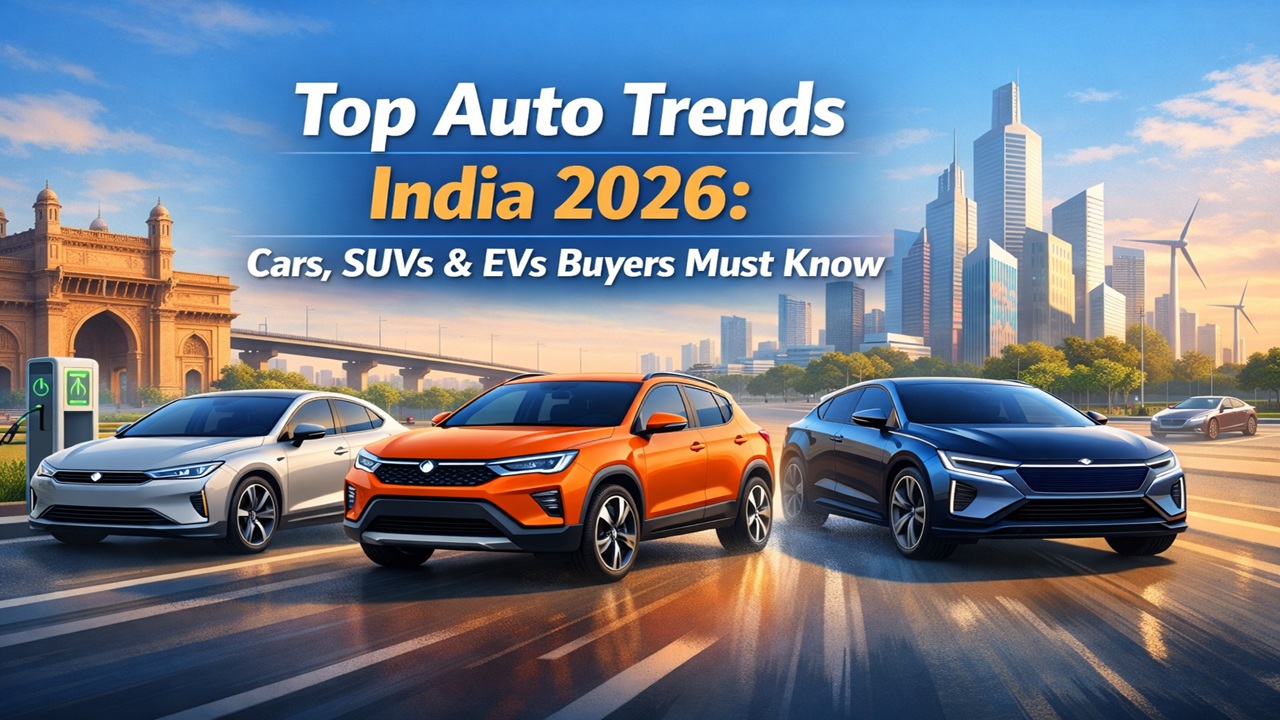
India’s car market is entering a decisive phase. By 2026, buying a car will no longer be just about mileage or brand reputation. Safety regulations are tightening, electrification is moving from niche to mainstream, and Indian buyers are far more informed than before. As an automotive journalist tracking this shift closely, it is clear that five major trends will fundamentally reshape how Indians choose, use, and own cars over the next few years.
These trends are not distant concepts. They are already visible in today’s launches, policy decisions, and buyer behaviour. Understanding them will help buyers make smarter, future ready decisions.
1. Electric Cars Move From Early Adoption to Practical Ownership
Electric vehicles in India are no longer limited to early adopters or city only users. By 2026, EVs will become a realistic option for a much wider group of buyers, especially in urban and semi urban areas.
What is driving this shift
- More affordable electric cars entering the Rs 10 to 18 lakh bracket
- Better real world driving range suited to Indian traffic
- Expansion of public charging networks on highways and in cities
- Lower running costs compared to petrol and diesel cars
Several electric models such as Tata Nexon EV, Tata Punch EV, MG Comet EV and MG ZS EV are already on sale, with prices starting close to Rs 8.5 lakh and going up to Rs 23 lakh depending on battery size and features. By 2026, more electric SUVs and compact cars are expected to join this space, making EV ownership less intimidating. For a closer look at one of the most anticipated EVs that blends nostalgia with modern technology, read our full guide on the Tata Sierra EV 2026.
Why this matters for Indian buyers
- Daily city driving becomes significantly cheaper
- Quieter and smoother driving suits traffic heavy conditions
- Lower maintenance due to fewer moving parts
- Increasing resale confidence as EV adoption grows
EVs fit especially well for families with predictable daily usage, office commuters, and multi car households where one car can be electric without compromising convenience. To enhance safety, consider installing an affordable dash cam in your EV, providing added security and peace of mind during city traffic or highway drives.
2. Safety Becomes a Deal Breaker, Not an Optional Feature
Indian buyers are finally prioritising safety over just mileage or touchscreen size. By 2026, safety ratings and features will play a major role in purchase decisions across segments.
Key changes influencing safety focus
- Mandatory six airbags becoming standard across many segments
- Growing awareness of Global NCAP crash ratings
- Improved body structures and better braking systems
- Advanced driver assistance features slowly entering mass market cars
Cars like Tata Nexon, Mahindra XUV 3XO, Skoda Slavia and Volkswagen Virtus have already shown that safety focused engineering can coexist with competitive pricing.
Practical impact on buyers
- Safer family travel on highways and poorly marked roads
- Better protection in city traffic accidents
- Improved confidence during long drives and night driving
Safety is also influencing accessory choices. Buyers are now investing in dash cameras, tyre pressure monitoring systems, better lighting upgrades and child safety accessories. This growing demand is encouraging car accessories manufacturers to focus more on safety oriented products designed for Indian driving conditions. For instance, understanding the impact of weak car lighting on night-time safety can guide practical upgrades, particularly on dimly lit rural stretches.
3. SUVs Continue to Dominate, But With a Practical Twist
The SUV trend in India is not slowing down, but it is evolving. By 2026, buyers will favour compact and mid size SUVs that balance road presence with daily usability.
What is changing within the SUV segment
- More compact dimensions for city friendly driving
- Better fuel efficiency and hybrid options
- Improved ride comfort on rough roads
- Focus on rear seat comfort for family use
Compact SUVs like Hyundai Creta, Kia Seltos, Maruti Brezza and Mahindra Scorpio N are already shaping buyer expectations. The next phase will see SUVs designed with better visibility, softer suspension tuning and easier ingress for older family members. For those interested in rugged yet refined SUVs, our guide to Mahindra’s upcoming 2026 models, including EV variants, shows how the brand is tailoring them for diverse terrains.
Why Indian buyers prefer this format
- Higher seating position helps on broken roads
- Better ground clearance reduces underbody damage
- Versatile for city, highway, and occasional rough usage
- Strong resale value across regions
For many households, an SUV is no longer a luxury but a practical upgrade from hatchbacks and sedans.
4. Ownership Experience Matters More Than Just Purchase Price
By 2026, Indian buyers will evaluate cars based on total ownership experience rather than just ex showroom price. This includes service quality, maintenance costs, reliability, and long term usability.
Factors shaping this trend
- Rising awareness of service and repair expenses
- Better access to online owner reviews and forums
- Growing preference for brands with wide service networks
- Demand for transparent service packages
Manufacturers are responding with extended warranties, service plans, roadside assistance packages and connected car diagnostics. Buyers are also paying attention to spare part availability and ease of repair.
Real world benefits for owners
- Predictable running costs over five to seven years
- Reduced downtime due to faster service support
- Better peace of mind for long term ownership
This trend also boosts demand for durable, utility focused accessories such as seat covers, floor mats, sunshades, roof carriers and protective coatings. Buyers increasingly rely on trusted car accessories manufacturers that understand Indian usage patterns rather than generic add ons. Seasonal preparation, such as our winter car care tips for 2026, can help extend vehicle life by addressing challenges like fog, frost, and cold-weather wear, keeping ownership costs under control.
5. Technology Becomes Purpose Driven, Not Just Feature Rich
Technology in Indian cars is maturing. Instead of flashy features, buyers are looking for tech that genuinely improves daily driving and safety.
Tech features gaining importance
- 360 degree cameras for tight parking spaces
- Connected car apps for vehicle health monitoring
- Adaptive cruise control on premium models
- Wireless smartphone integration with stable performance
Touchscreens and digital clusters are now expected, but buyers are more critical of usability and reliability. Poorly integrated systems or laggy interfaces are increasingly seen as deal breakers.
How this helps Indian drivers
- Easier navigation in congested cities
- Better vehicle tracking and security
- Reduced driver fatigue on highways
- Improved control during parking and low speed manoeuvres
Technology that works well in heat, dust, and inconsistent network conditions will define brand trust going forward.
How These Trends Change Buying Decisions in 2026
By 2026, Indian car buyers will approach purchases more thoughtfully. Instead of choosing based on discounts or brand image alone, they will evaluate how a car fits their lifestyle over several years. For a comprehensive look at what’s coming, see our guide to upcoming cars in India for 2026, including the must-watch SUVs and EVs.
Buyers will ask smarter questions
- Is this car safe enough for my family
- Will running costs remain manageable
- Does it suit daily city driving and occasional highway trips
- Is the technology reliable in real Indian conditions
- Can it be easily upgraded with useful accessories later
This shift benefits manufacturers who invest in engineering, safety, and ownership experience rather than just cosmetic updates.
What This Means for First Time and Upgrading Buyers
For first time buyers, the market will feel more complex but also more transparent. Clear safety ratings, ownership data, and real world reviews make decision making easier. If you’re upgrading from a used car, follow these tips to avoid common used car inspection mistakes.
For upgrading buyers, expectations will be higher. Many will move from hatchbacks to compact SUVs or from petrol cars to EVs based on actual usage patterns rather than trends.
Accessories and personalization will also play a bigger role, as buyers look to tailor their cars for comfort, safety, and convenience from day one.
FAQs About Auto Trends in India 2026
Is 2026 a good time to buy a car in India?
Yes. By 2026, Indian buyers will benefit from safer cars, more powertrain options including EVs and hybrids, and greater ownership transparency. New safety norms, improved technology, and expanding EV infrastructure make car buying more future-ready.
Will electric cars be practical for Indian roads by 2026?
Electric cars will suit most city and suburban users by 2026. Improved real-world range, growing charging networks, and lower running costs make EVs ideal for daily commuting. Long-distance highway users may still prefer petrol, diesel, or hybrid cars depending on usage.
Are SUVs still the best choice for Indian families?
Yes. Today, buyers choose SUVs for practicality rather than size. Compact and mid-size SUVs offer better visibility, ground clearance for rough roads, and comfortable seating for families, making them a balanced option for Indian driving conditions.
How important will safety ratings be for car buyers in India?
Safety ratings will increasingly influence buying decisions. Indian car buyers are checking crash test scores, airbag counts, and braking performance, especially for family cars and highway driving.
Will car ownership become more expensive in the future?
Car prices may rise due to stricter safety and emission norms, but ownership costs will become more predictable. Improved reliability, longer warranties, service packages, and lower running costs for EVs will help balance long-term expenses.
Are car accessories becoming more important for Indian buyers?
Yes. Buyers are focusing on practical upgrades that improve safety, comfort, and usability rather than opting for expensive top variants. Many rely on trusted car accessories manufacturers to customize their vehicles for Indian driving conditions.
Will technology features matter more than mileage in 2026?
Mileage will remain important, but buyers are prioritizing technology that enhances daily driving, safety, and convenience. Features like parking cameras, stable infotainment systems, and vehicle health monitoring will strongly influence purchase decisions.
Conclusion on India’s Auto Trends 2026
The Indian car market in 2026 will reward informed buyers. Electric mobility, safety led design, practical SUVs, ownership focused thinking, and meaningful technology will define the next phase of growth.
For buyers, this means better cars, safer journeys, and more value over the long term. For the industry, it means listening closely to how Indians actually drive, commute, and live with their cars every day.
Those who understand these trends early will not just buy better cars. They will enjoy ownership more confidently, economically, and responsibly in the years ahead.